
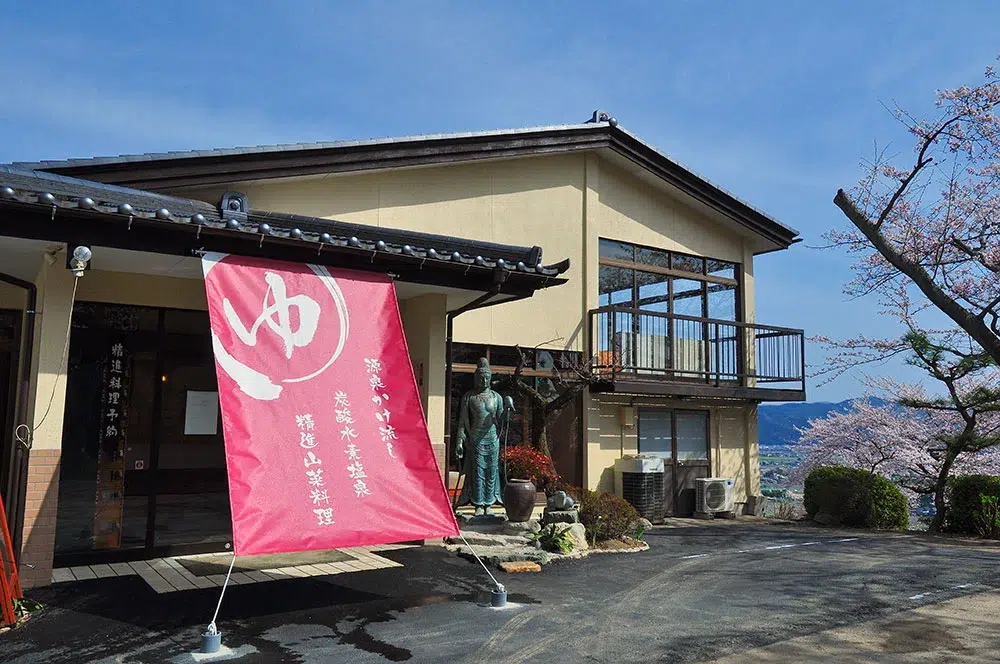
Yugenosato (湯華の郷) is a natural hot spring in Ikeda, Gifu, with a restaurant, Yugean (湯華庵), that serves shojin ryori: Buddhist vegetarian cooking built on mountain vegetables and the season. The spring sits beside Yugeji, a temple said to date to 817. You can come just for lunch, or bathe and eat on one ticket. We came for lunch in October 2026, guests of a family friend, Marina.
Lunch with a family friend
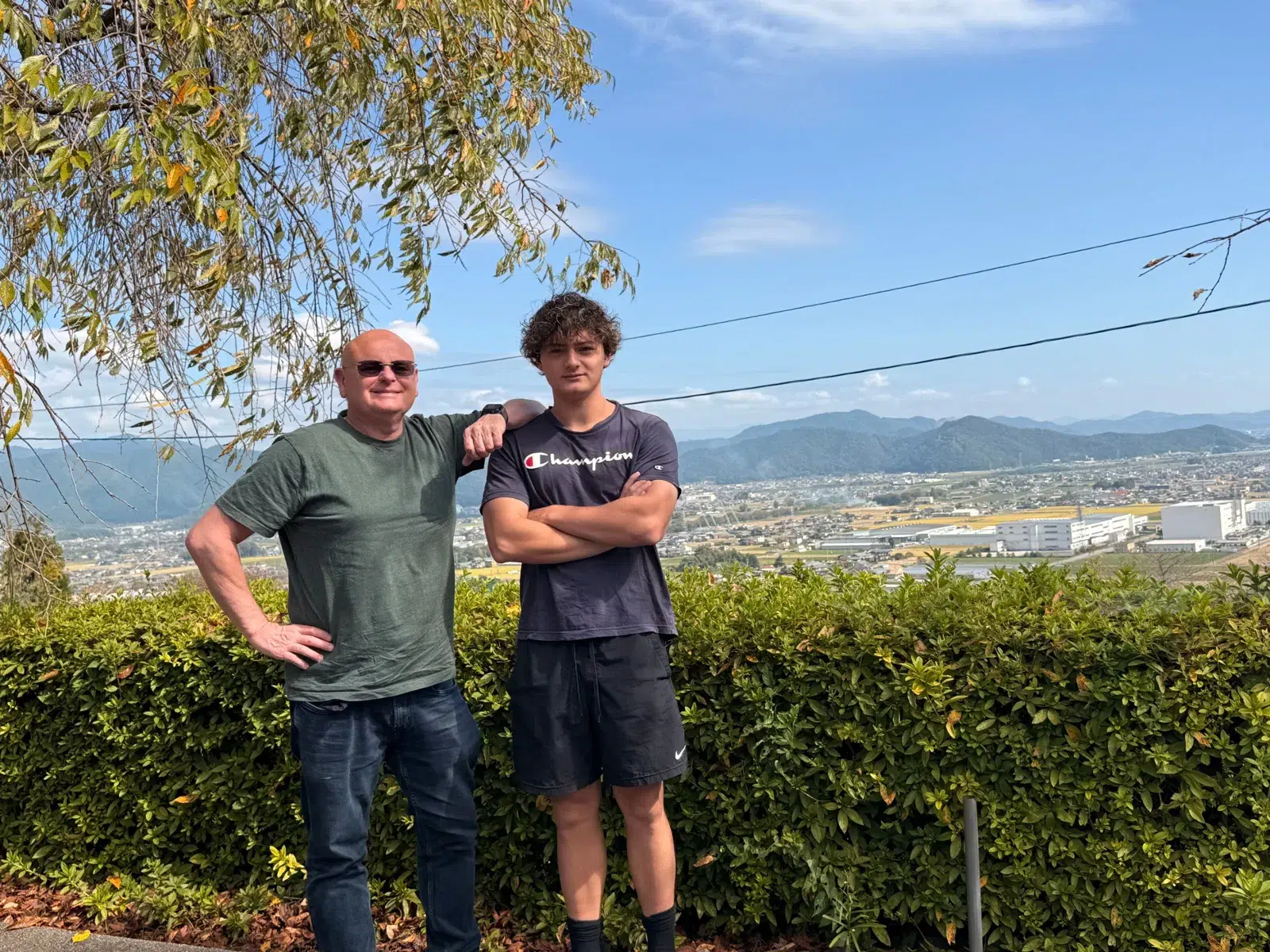
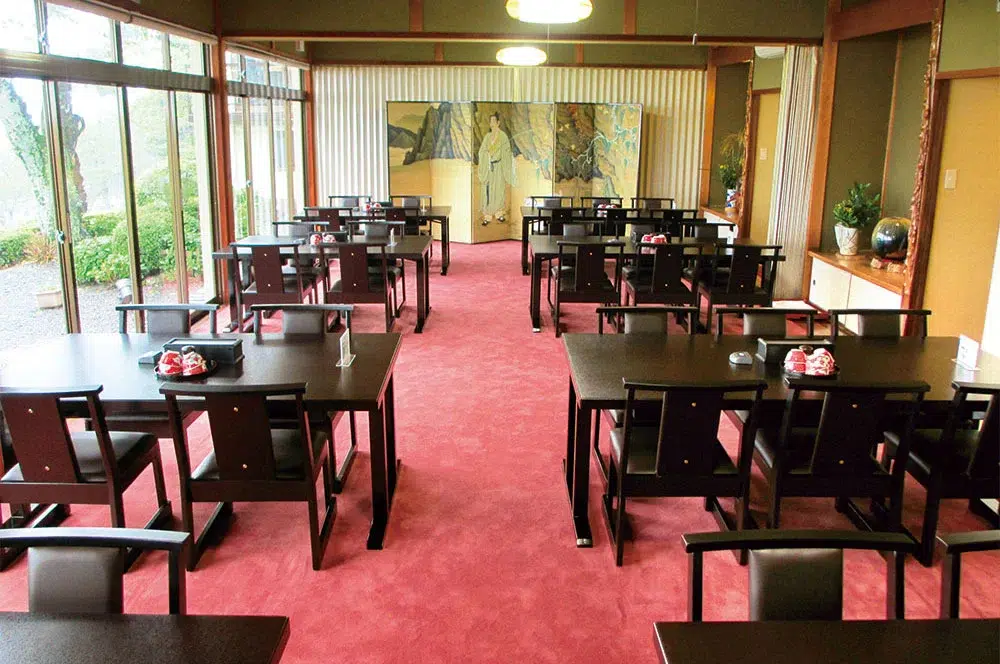
This trip is about having fun, with family and friends helping me find places I’d never find alone. Yugenosato is one of them. My son Kayne and I were taken there by Marina, a family friend: her daughter went to school with my wife, Kimie. We went on a Sunday at 11am, before the noon rush, so there would be time to talk with the owner.
Marina steered us gently through the menu. One set was the special one, and pricier, so she suggested we could just as easily pick something everyday. I asked about ramen. No ramen here. This isn’t a ramen kind of place, and that turned out to be the point.
The temple behind the spring
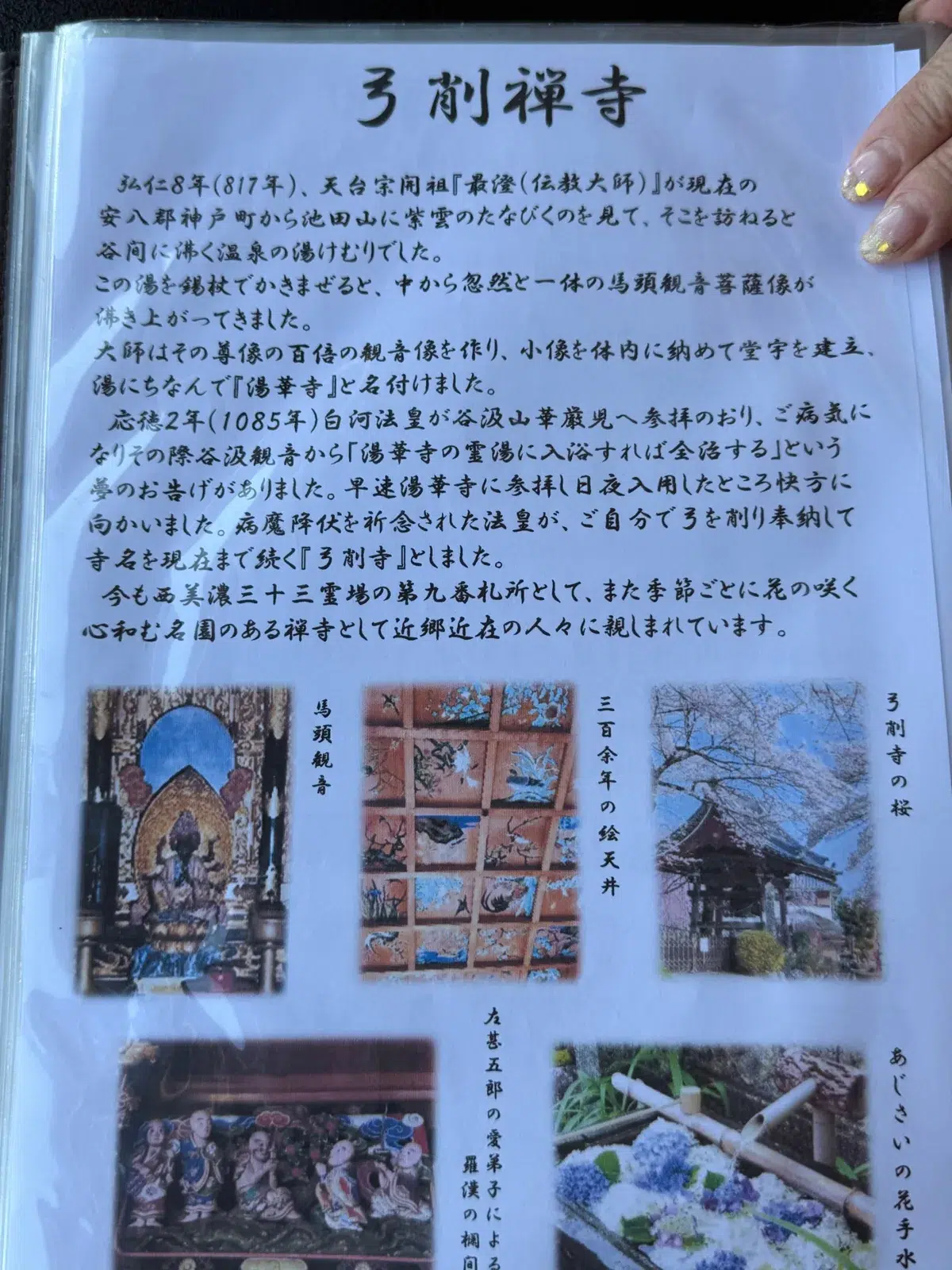
The menu opens with the story of Yugeji (弓削寺), and it’s a good one. In 817, the story goes, Saicho, founder of the Tendai school of Buddhism, saw purple clouds trailing over Mt Ikeda. He followed them and found steam rising from a hot spring in the valley. When he stirred the water with his staff, a statue of Bato Kannon, the horse-headed Kannon, rose out of it. He built a hall and named it Yugeji, written 湯華寺: “hot-spring flower temple”.
In 1085, the menu continues, the retired Emperor Shirakawa fell ill on a pilgrimage to nearby Tanigumi-san Kegonji. In a dream he was told that bathing in Yugeji’s sacred water would cure him. He bathed day and night, recovered, and carved a bow (弓, yumi) to offer in thanks. The temple’s name changed to 弓削寺, “bow-carving temple”, which it still carries. It is the ninth temple on the Nishi-Mino 33 Kannon pilgrimage, with a garden known for cherry blossom and hydrangeas.
What is shojin ryori?
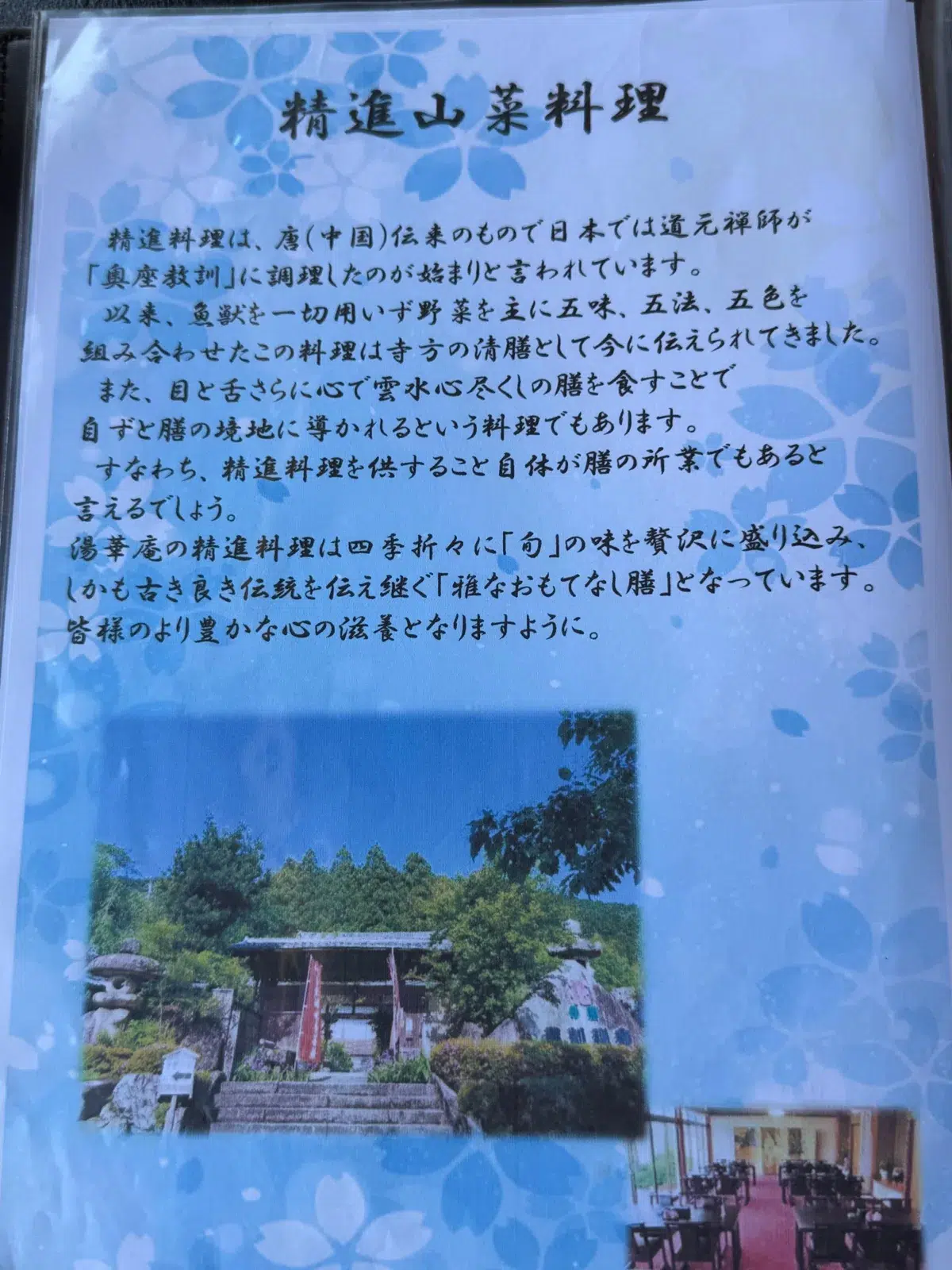
Shojin ryori (精進料理) is the cooking of Japanese Buddhist temples. The menu explains that it came from Tang China and that in Japan it is said to begin with the Zen master Dogen and his Instructions for the Cook (典座教訓). It uses no meat or fish. Vegetables lead, balanced across five flavours, five cooking methods and five colours. Yugean says its version is built on what’s in season and is meant to nourish the mind as well as the body.
Not everything on the menu is vegetarian, though. There are prawn, eel and chicken dishes too, and I went for one of them.
What we ate
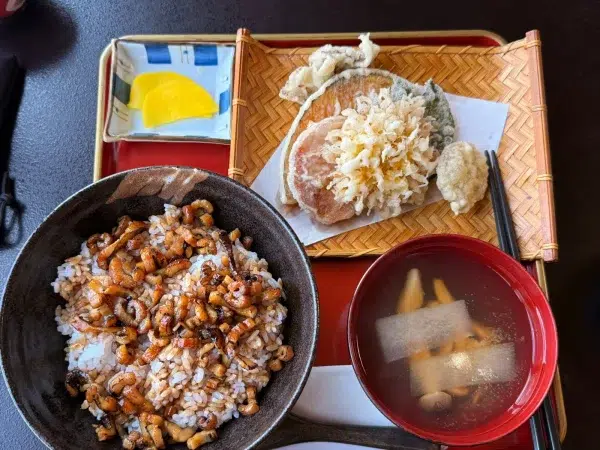
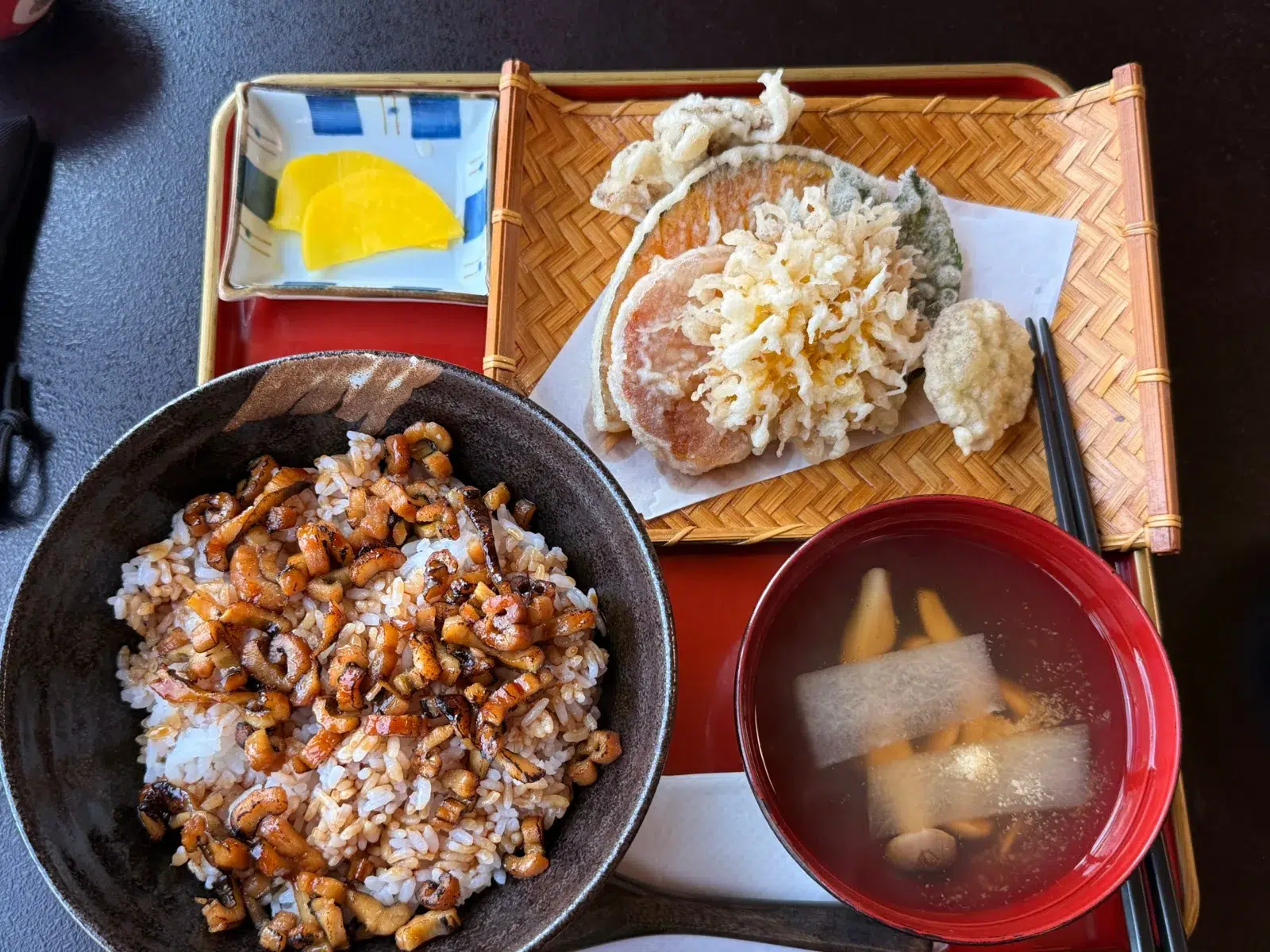
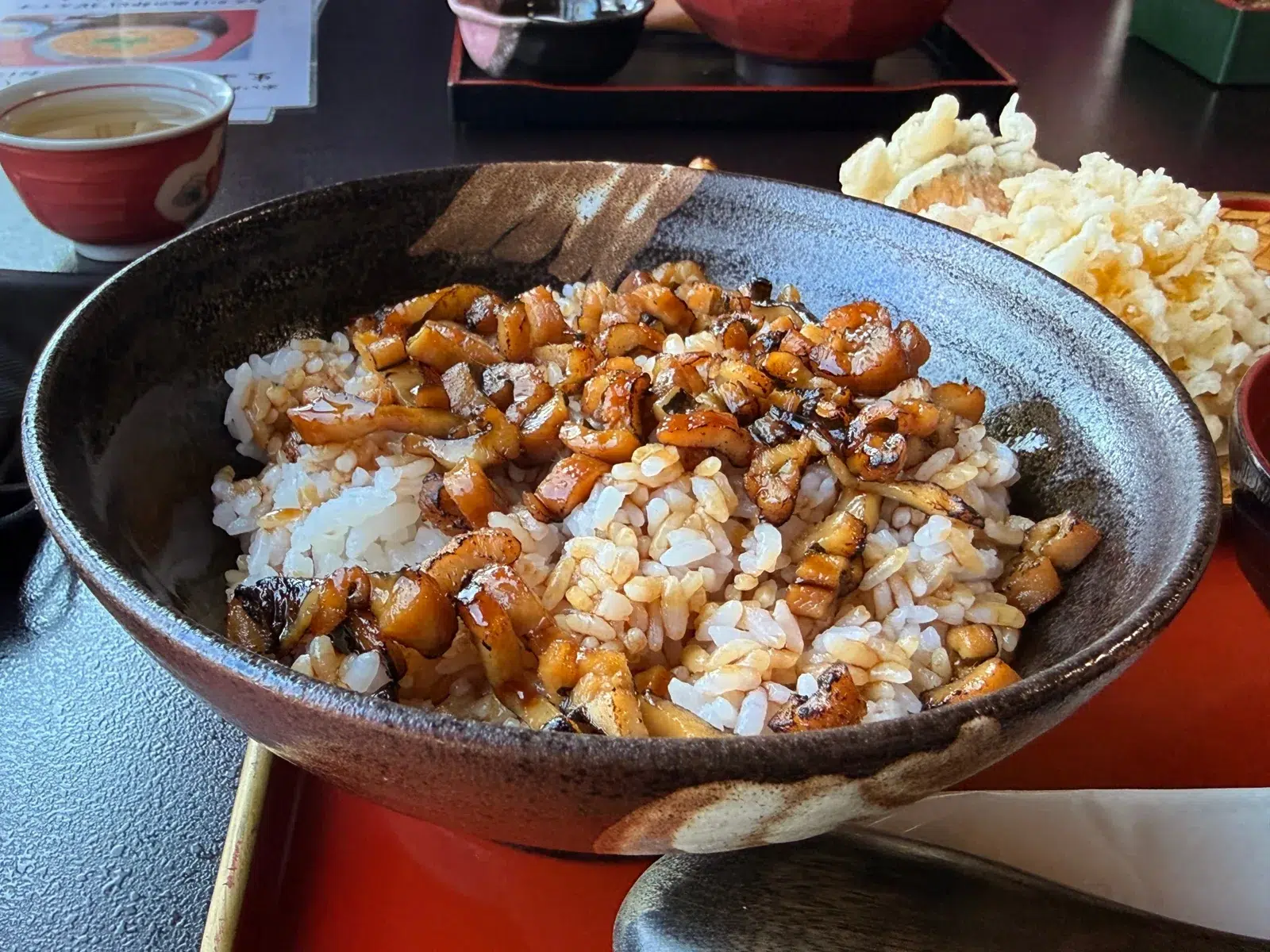
My lunch: the grilled anago bowl set (焼きあなご丼セット, ¥1,800). Anago is conger eel, a sea eel, lighter than the freshwater unagi most visitors know. Here it comes chopped and grilled over rice with a sweet soy glaze. The set came with a clear soup with daikon and mushrooms, yellow takuan pickles, and a bamboo tray of autumn tempura: a shiso leaf (a Japanese herb in the mint family), a chrysanthemum flower, a slice of persimmon, pumpkin and mushrooms. The eel was surprisingly nice. Just a small piece was so flavoursome, and mixed with the rice and the sauce it was delicious.
The surprise was the chrysanthemum. It was the first time I’d eaten one, and it had a slightly bitter taste.
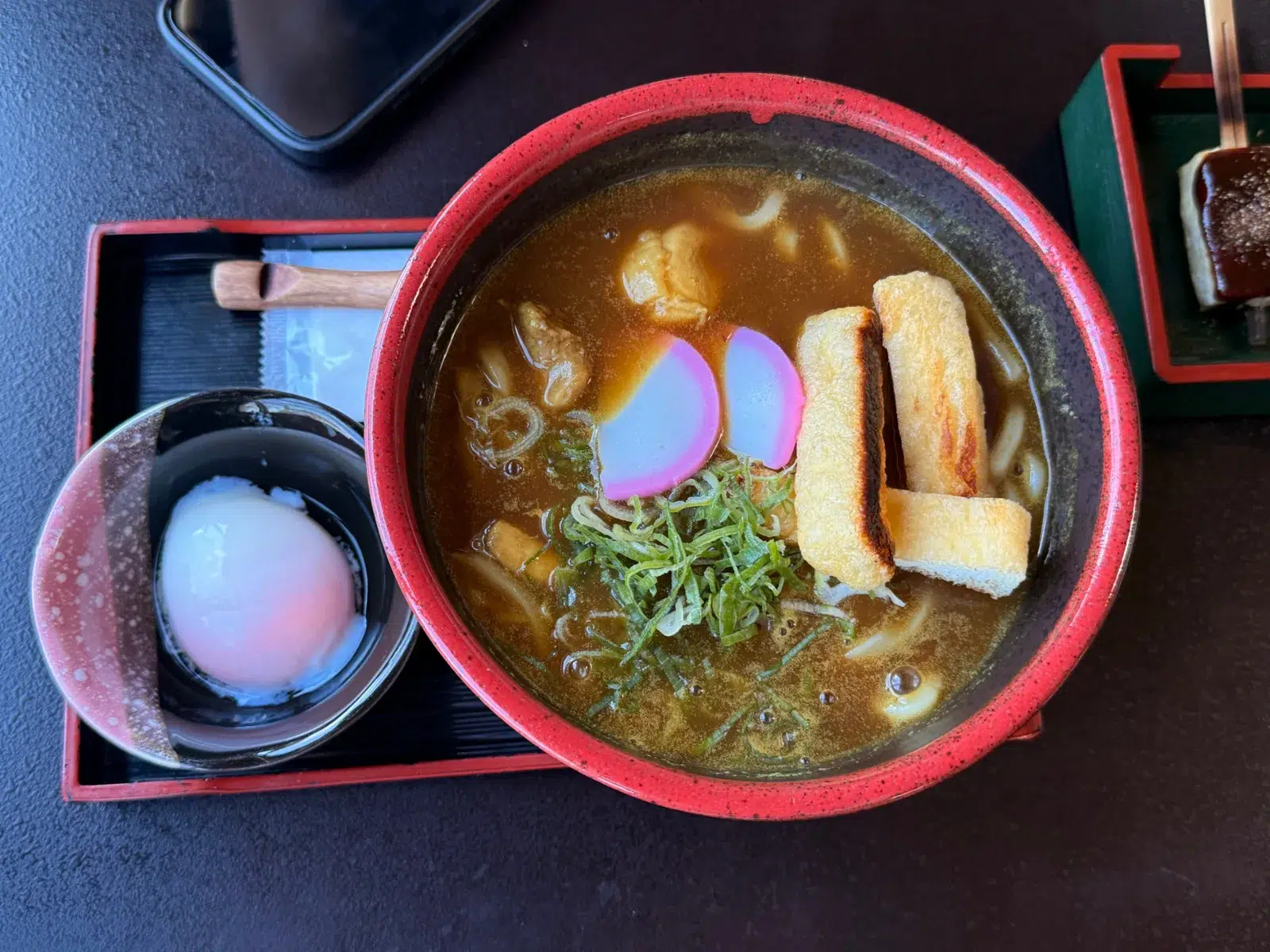
Kayne: curry udon with an onsen egg (特製カレーうどん, ¥950). Thick udon in a curry broth, topped with grilled fried tofu, kamaboko fish cake, chicken and a heap of spring onion. The soft hot-spring egg comes on the side, to slip in as you go.
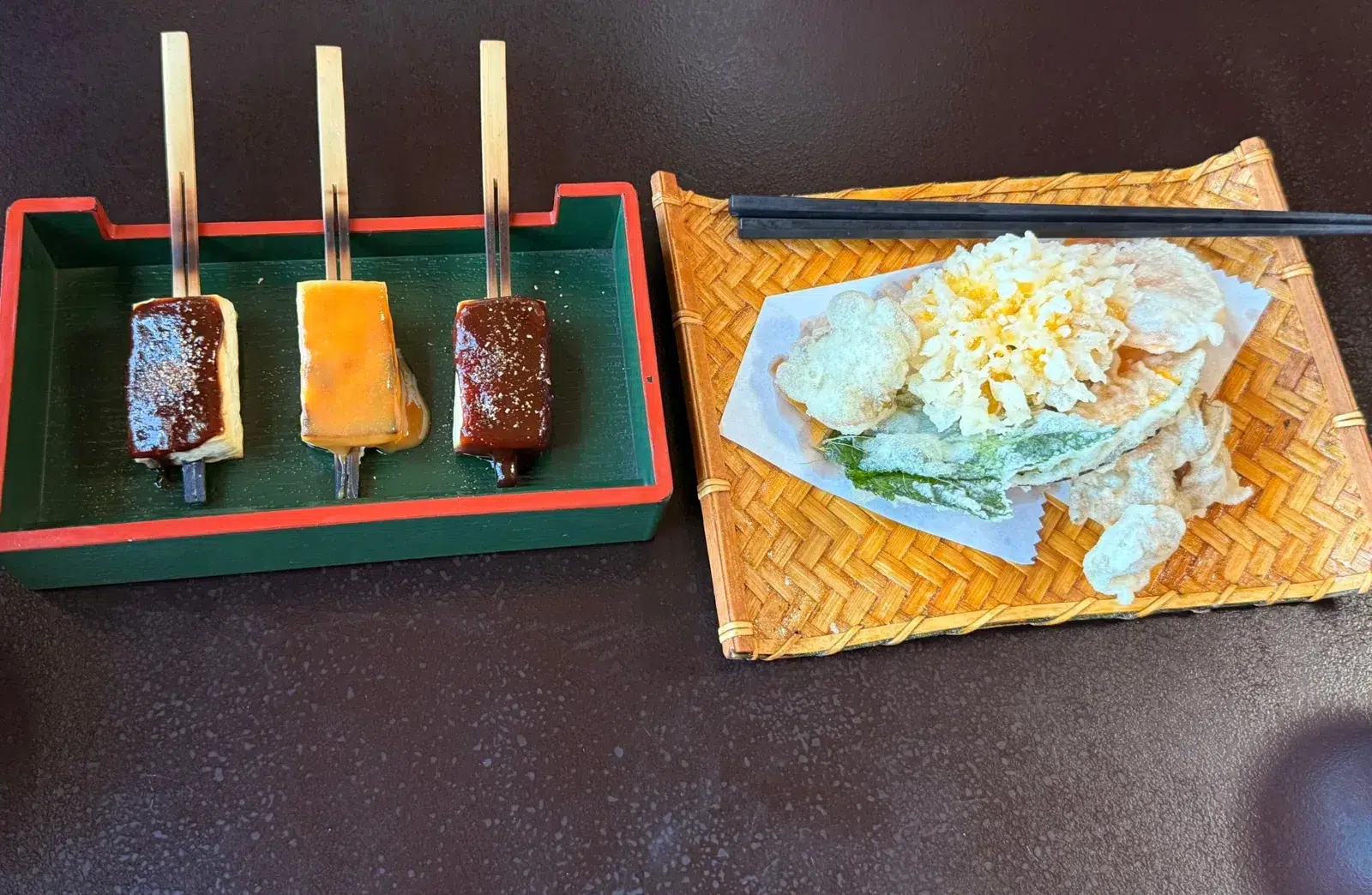
Marina: miso dengaku and mountain vegetable tempura (味噌田楽 ¥450, 山菜天ぷら盛り合わせ ¥650). Dengaku is tofu on a skewer, grilled and spread with miso. Three skewers come to a serve, and ours had two different misos: two dark and glossy, one golden. The tempura is a mix of six mountain vegetables, including a shiso leaf, fried light and crisp. Both are from the shojin side of the menu. The dengaku was delicious, and each small piece was surprisingly strong in flavour. A little goes a long way.
Marina doesn’t eat much, so dishes went round the table and we were told to help ourselves to whatever we liked. That’s the best way to eat in Japan: someone local ordering, and everyone sharing.
Hot green tea was on the table throughout, and that was all the tea we had. If you want something more, there is a matcha set on the menu.
Menu and prices
Prices include tax and are from the menu on our visit in October 2026, except the Yuge gozen and bath plan, which are from Yugenosato’s website.
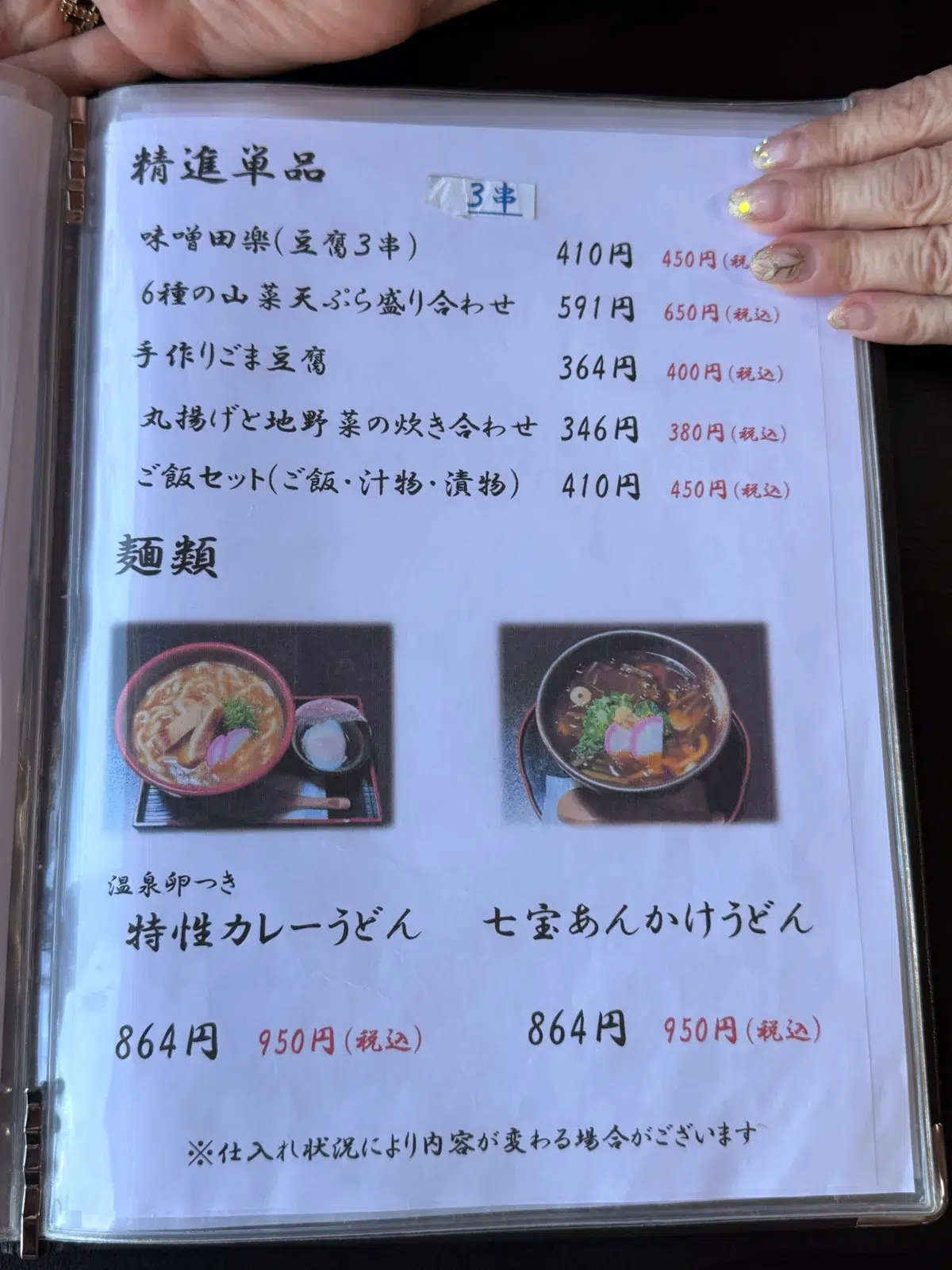
| Dish | What it is | Price (¥) |
|---|---|---|
| Shojin (vegetarian) à la carte | ||
| Miso dengaku | Tofu with miso, 3 skewers | 450 |
| Mountain vegetable tempura | Six kinds | 650 |
| Handmade sesame tofu | 400 | |
| Fried tofu and local vegetables | Simmered together | 380 |
| Rice set | Rice, soup, pickles | 450 |
| Sets | ||
| Yuge gozen (湯華御膳) | Soba, sesame tofu, side, rice, soup, tempura, simmered dish, pickles, fruit | 2,800 |
| Bath and lunch plan | Hot spring entry plus a shojin meal | 3,500 |
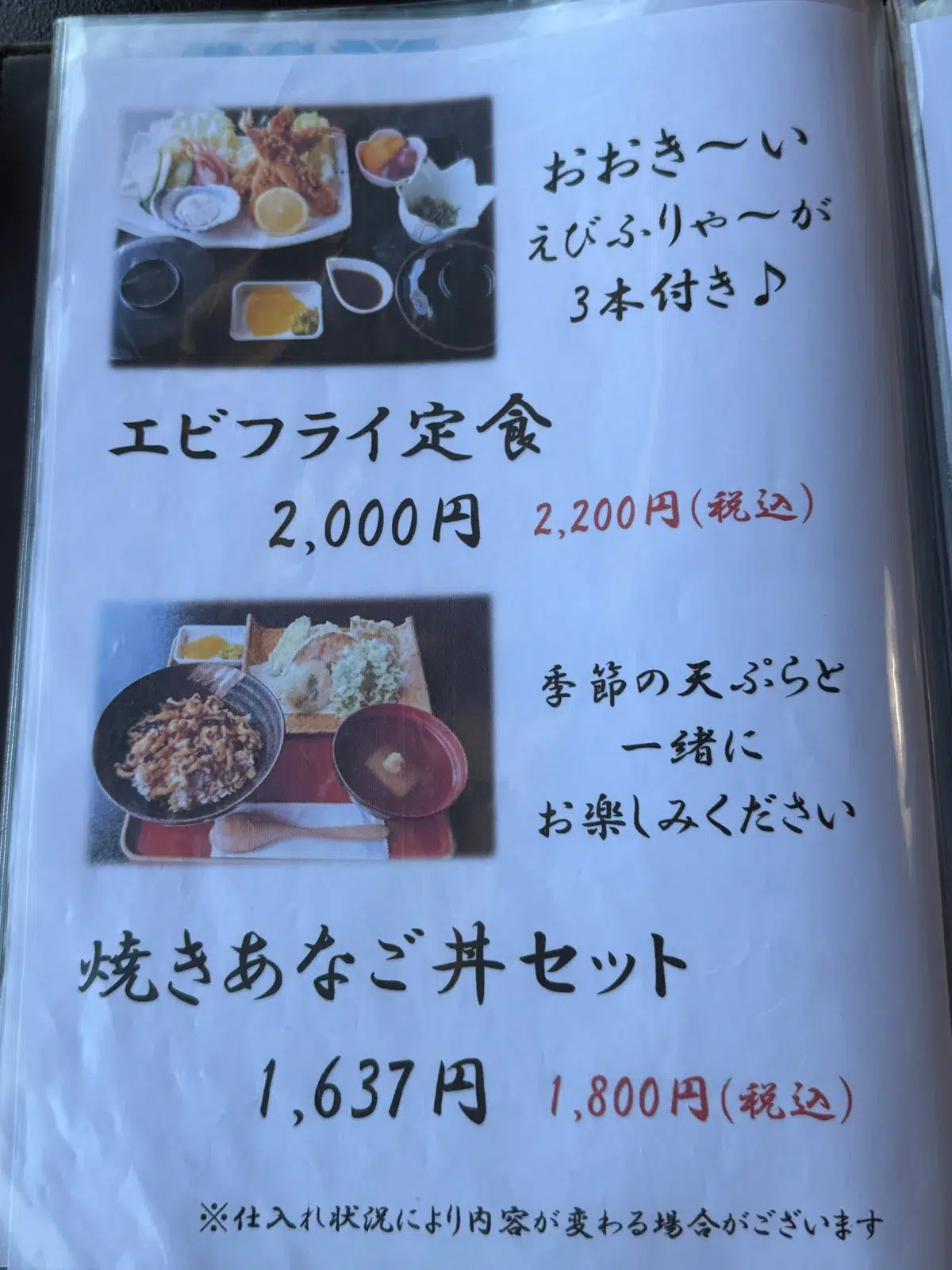
| Grilled anago bowl set | With seasonal tempura | 1,800 |
| Fried prawn set | Three big prawns | 2,200 |
| Noodles | ||
| Curry udon | With an onsen egg | 950 |
| Shippo ankake udon | Udon in a thick, glossy sauce | 950 |
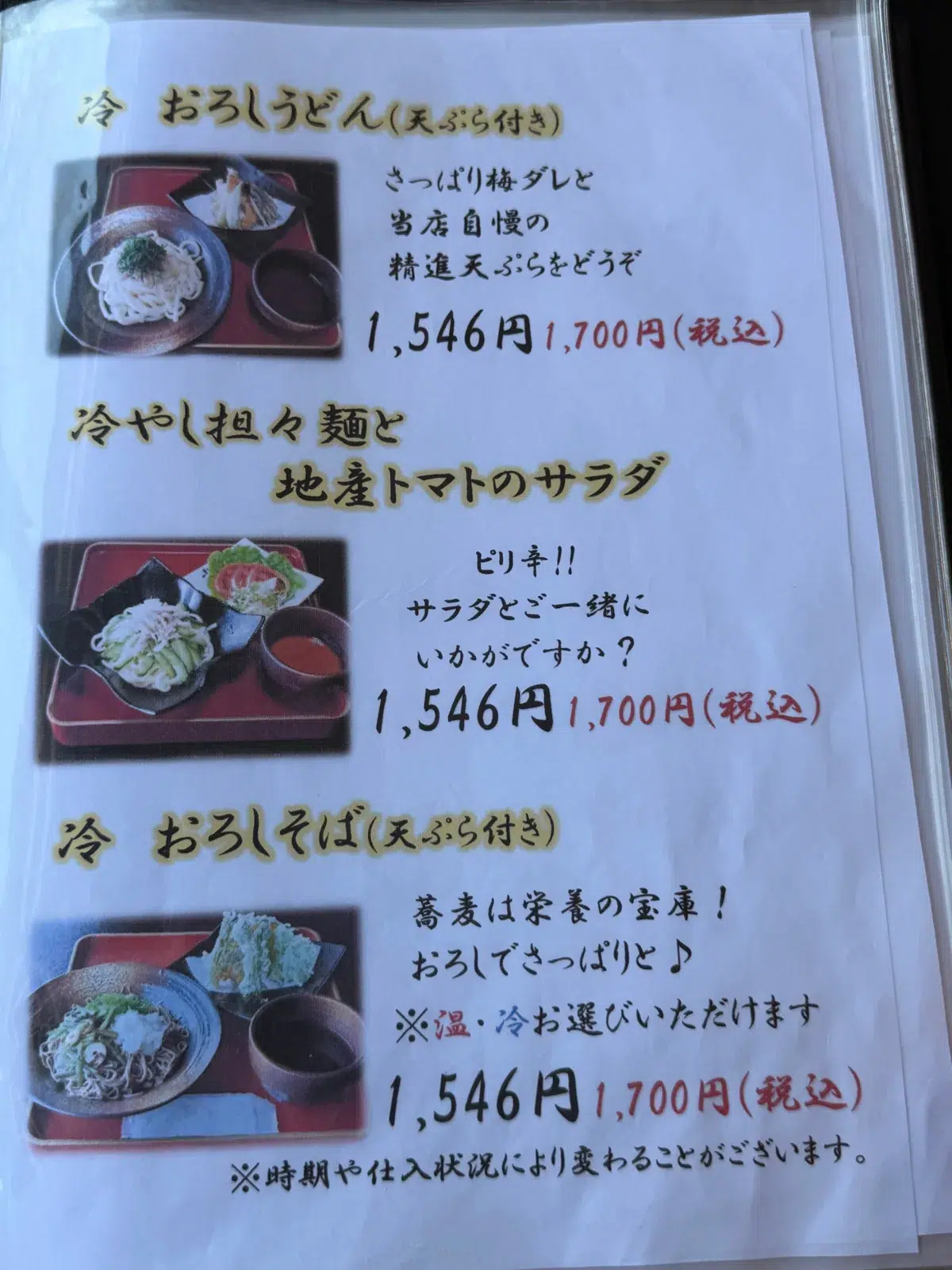
| Cold oroshi udon with tempura | Grated daikon, a light plum sauce, shojin tempura | 1,700 |
| Oroshi soba with tempura | Hot or cold | 1,700 |
| Chilled tantanmen with local tomato salad | Spicy | 1,700 |
| Tea | ||
| Matcha set | Green tea | 600 |
- The menu notes that dishes change with the season and what’s available.
- The fried prawn page is a little Nagoya joke: えびふりゃ〜 (ebi furyaa) is the local way of saying “ebi furai”, fried prawn.
- On the bath and lunch plan, the meal ticket is issued at the front desk and is only valid on the day you buy it.
Before you go
| Name | Yugenosato (天然温泉 湯元 湯華の郷); restaurant Yugean (湯華庵) |
| Address | 721 Dan, Ikeda-cho, Ibi-gun, Gifu (岐阜県揖斐郡池田町段721) |
| Phone | 0585-45-3804 |
| Meals | 11:00–21:00 (last order 20:00) |
| Hot spring | 10:00–22:00 (last entry 21:30); December to February 10:00–21:00 (last entry 20:00) |
| Closed | Thursdays (Friday if Thursday is a public holiday) |
| Tip | Arrive before noon. We came at 11am on a Sunday and beat the lunch rush |
| Website | yugenosato.com (Japanese) |
Come hungry and in no hurry: have a soak, a lunch and a matcha, and visit the temple the spring is named for. Let someone local do the ordering if you can. If you can’t, our free ordering cards will help.


